G1 Test Questions 2026: The 10 Ontario Learners Miss Most, With Answers
What the questions look like, the ten hardest in a bank of 683 measured on 1.8 million answers, each answered from the handbook, and where the other 673 are
Start a Free G1 TestHelp Others — Share This Page

What a G1 test question looks like
Multiple choice, four answers, one right. Two parts: traffic signs and the rules of the road. Every question written to the Official MTO Driver’s Handbook.

The format. A question, four answers, one correct. Many sign questions show the sign and ask what it means. DriveTest requires at least 80% to pass; a test typically takes 20 to 30 minutes.
The real questions. DriveTest does not publish the paper. The province publishes eight official sample questions in the handbook’s “Test yourself” chapter, in exactly this format. The 683 questions on this site are written to the same handbook, across the 19 topics the test draws from.
Which ones are hard. We measured every one of the 683 on 1.8 million answers. The ten below are the ones learners miss most, each shown with its answer and the sentence in the handbook that settles it. Start a free test when you have read them.
The 10 G1 questions Ontario learners miss most
Measured from 1,803,709 answers to the 683 Ontario G1 questions on this site, counted 2 November 2026. Each question below has at least 1,600 answers behind it, and each marked answer is confirmed by the handbook’s own words, quoted under it.
1. Double curve ahead — missed by 44 in 100

What does this sign mean?
- A. The road ahead has a double curve. — correct
- B. There is a sharp right turn ahead.
- C. There is a winding road ahead.
- D. There is a hidden road on the left side ahead.
The handbook says: “Warning signs are usually diamond-shaped and have a yellow background with black letters or symbols. This one warns of a double curve ahead.” (Traffic Signs and Lights: Signs)
8,445 answers on this site; 44% wrong.
Practise this topic2. How far ahead you must see the ground — missed by 43 in 100
The driver should be able to see the ground _____ in front of the vehicle.
- A. 3 meters
- B. 4 meters — correct
- C. 5 meters
- D. 6 meters
The handbook says: “You should be able to see the ground four metres in front of the vehicle.” (Getting ready to drive)
5,904 answers on this site; 43% wrong.
Practise this topic3. Parking near an intersection — missed by 43 in 100
Do not park within ________ metres of an intersection.
- A. 3
- B. 15
- C. 9 — correct
- D. 6
The handbook says: “Do not park within nine metres of an intersection or within 15 metres if it is controlled by traffic lights.” (Parking along roadways)
2,626 answers on this site; 43% wrong.
Practise this topic4. Loading a trailer — missed by 42 in 100
How should you properly load a trailer designed to carry loads?
- A. Place most of the load in front of the trailer axle — correct
- B. Place most of the load behind the trailer axle
- C. Distribute most of the load evenly in the middle of the trailer
- D. You can place the load anywhere without affecting balance
The handbook says: “Generally, more of the trailer load should be in front of the trailer axle than behind it for proper hitch weight.” (Towing)
2,425 answers on this site; 42% wrong.
Practise this topic5. A stopped streetcar with a safety island — missed by 39 in 100
When a streetcar is stopped to pick up or discharge passengers and there is a safety island, what does the law require you to do?
- A. Pass on the left side of the streetcar.
- B. Stop at least 2 metres behind the safety island.
- C. Sound the horn and pass with caution.
- D. Pass with caution. — correct
The handbook says: “Some streetcar stops have a special safety island or zone for passengers getting on and off. Pass these safety islands and zones at a reasonable speed.” (Sharing the road with other road users)
2,008 answers on this site; 39% wrong.
Practise this topic6. Impaired driving causing bodily harm — missed by 39 in 100
If you are convicted of impaired driving causing bodily harm, you may be sentenced to up to ________ years in prison.
- A. 10 years
- B. 2 years
- C. 14 years — correct
- D. 6 years
The handbook says: “If you are convicted of impaired driving causing bodily harm, you may be sentenced to up to 14 years in prison.” (Other ways to lose your licence)
2,834 answers on this site; 39% wrong.
Practise this topic7. Caught in dense fog — missed by 38 in 100
What’s the best thing to do if you get caught driving in dense fog?
- A. You should slow down and continue your journey.
- B. You should move off the road and into a safe parking area. — correct
- C. You should switch to low-beam headlights.
- D. All of the above.
The handbook says: “If visibility is decreasing rapidly, move off the road and into a safe parking area to wait for the fog to lift.” (Driving at night and in bad weather)
2,149 answers on this site; 38% wrong.
Practise this topic8. Parking near a bridge — missed by 38 in 100
Do not park within ________ of a bridge.
- A. 150 metres
- B. 190 metres
- C. 100 metres — correct
- D. 250 metres
The handbook says: “Do not park within three metres of a fire hydrant, on or within 100 metres of a bridge or within six metres of a public entrance to a hotel, theatre or public hall when it is open to the public.” (Parking along roadways)
2,162 answers on this site; 38% wrong.
Practise this topic9. Blood alcohol over .08 — missed by 37 in 100
If your blood alcohol concentration (BAC) is more than 0.08, your license will be suspended immediately for:
- A. 30 days
- B. 90 days — correct
- C. 60 days
- D. 1 year
The handbook says: “Your licence will be suspended immediately for 90 days if your BAC is more than 80 milligrams in 100 millilitres of blood (.08).” (Other ways to lose your licence)
1,621 answers on this site; 37% wrong.
Practise this topic10. Behind a stopped streetcar — missed by 35 in 100
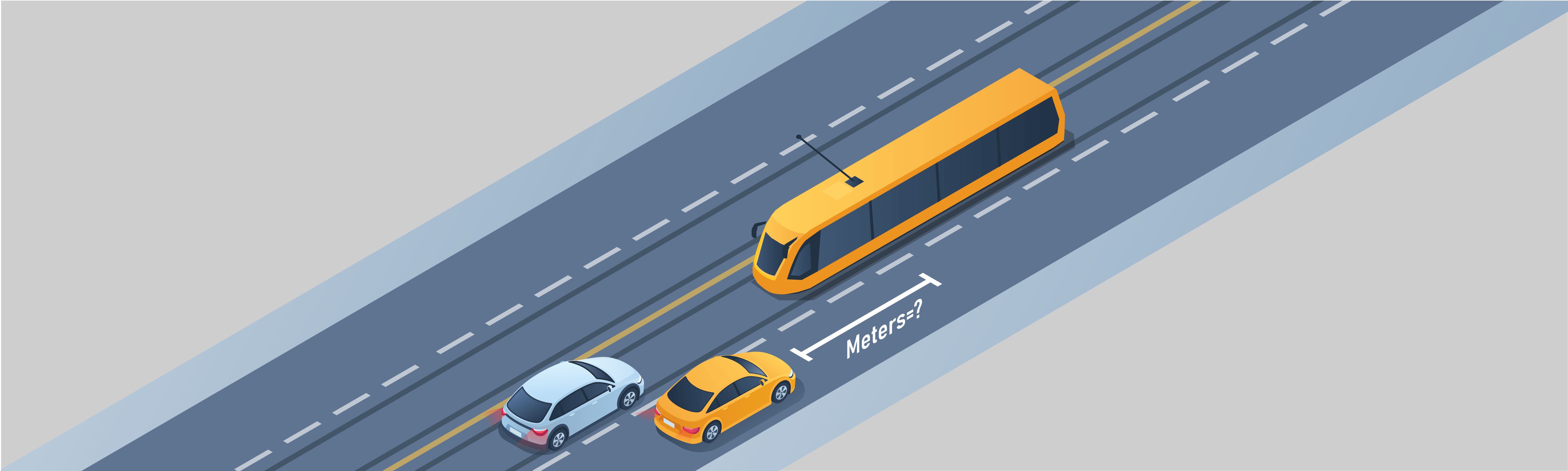
How far should you stay behind the rear doors of a stopped streetcar?
- A. Two meters — correct
- B. Three meters
- C. Four meters
- D. Five meters
The handbook says: “At streetcar stops, stay at least two metres behind the rear doors where passengers are getting off or on.” (Changing positions)
3,486 answers on this site; 35% wrong.
Practise this topicHow it is measured: a question’s rate is the share of its answers on this site that were wrong. Handbook sentences are from the Official MTO Driver’s Handbook on ontario.ca, read 2 November 2026. Questions whose wording the handbook does not settle were left out of this list on purpose.
Where the other 673 questions are
| You want | Go to |
|---|---|
| Questions by topic, the 19 topics ranked by difficulty | The G1 knowledge test syllabus |
| A 40, 100 or 200-question set, or all 683 | The practice-test library |
| Sign questions with pictures, and the signs missed most | The road signs test |
| Questions under the clock, the way the real test feels | The timed mock tests |
| The questions you personally got wrong | Your Challenge Bank |
| A PDF of questions and answers | There is none here; a PDF cannot explain a wrong answer. The province’s handbook is free online with its eight sample questions |
All 683 questions, every way you can take them





Try the 10 hardest, then the other 673
Practice Test 6: 45 questions from the whole bank, free, no signup, the explanation after every answer, your misses saved to the Challenge Bank.
Start Practice Test 6G1 test questions: frequently asked questions
Straight answers, with this site’s own measurements and the province’s handbook behind them.
Multiple-choice questions on the rules of the road and traffic signs, drawn from the Official MTO Driver’s Handbook: signs, lights and markings, intersections, parking, sharing the road, keeping your licence, towing, driving in bad weather and the rest. On this site that is 683 questions across 19 topics, each topic a chapter of the handbook.
Measured on 1.8 million answers on this site, the ten most-missed are listed above: the double-curve sign (44% wrong), how far ahead you must see the ground (43%), parking within nine metres of an intersection (43%), loading a trailer (42%), passing a streetcar with a safety island (39%), the 14-year sentence for impaired driving causing bodily harm (39%), dense fog (38%), parking near a bridge (38%), the 90-day suspension over .08 (37%) and the two metres behind a stopped streetcar (35%).
No site has the real paper; DriveTest does not publish it. Every question here is written to the same handbook the real test is written from, in the same format as the province’s eight official sample questions.
Not on this site. A PDF cannot explain a wrong answer, and the practice tests here can. The province’s handbook is free to read online, and its official sample questions are on ontario.ca.
DriveTest requires at least 80% to pass and says a test typically takes 20 to 30 minutes. Practice guides describe 40 questions in two parts of 20; the province does not confirm the count on the pages we can read.
On this site’s measurements: 64 in 100 completed practice attempts reach the 80% pass mark, and on the timed mock tests, taken later, 86 in 100 do. The ten questions above are where most of the lost marks are.


